
Pixel Art Faces
Faces concentrate all of pixel art’s difficulty into a dozen pixels: every dot is expression, and every extra dot is noise. Less is a technique.
Eyes carry the face
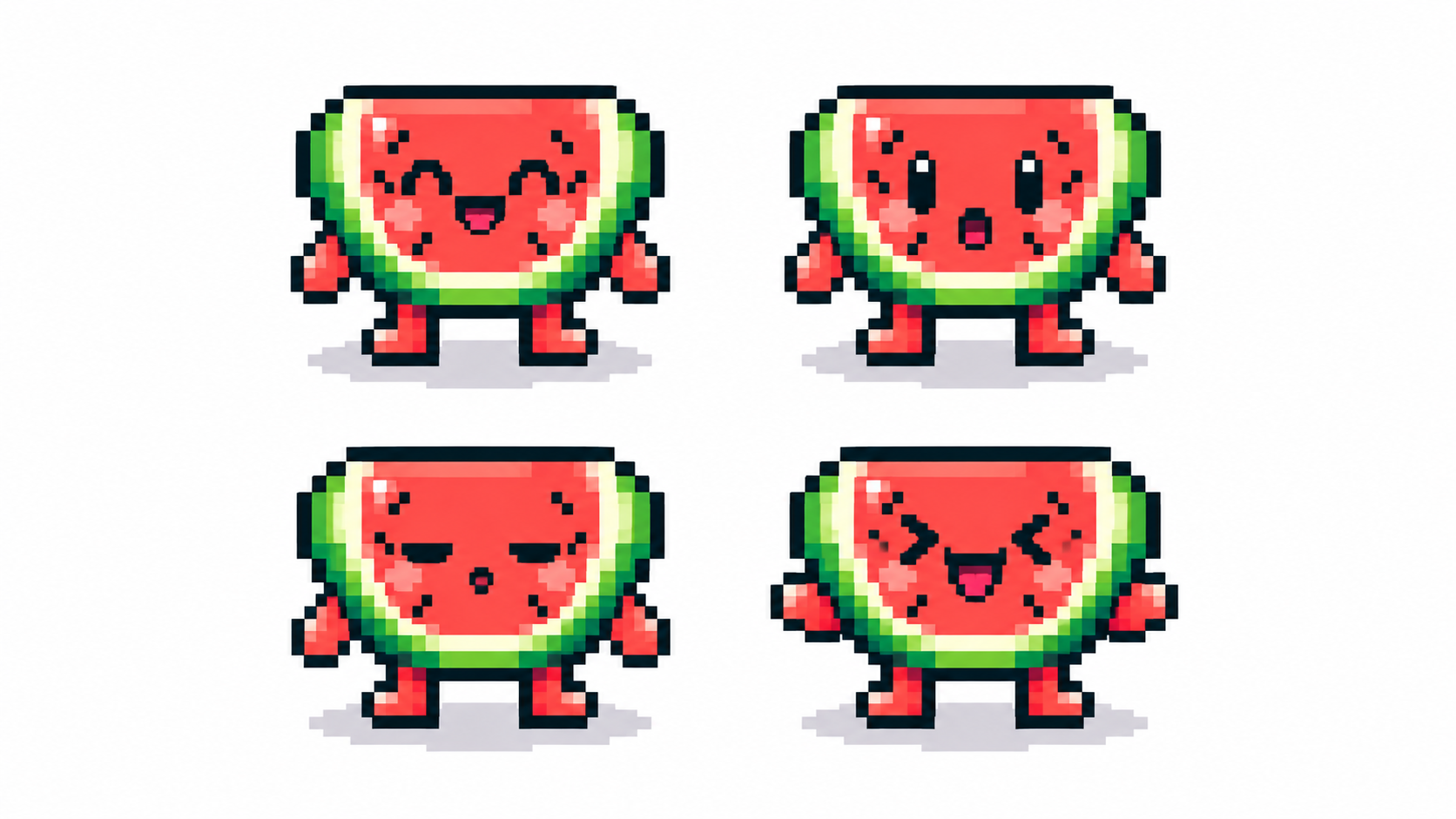
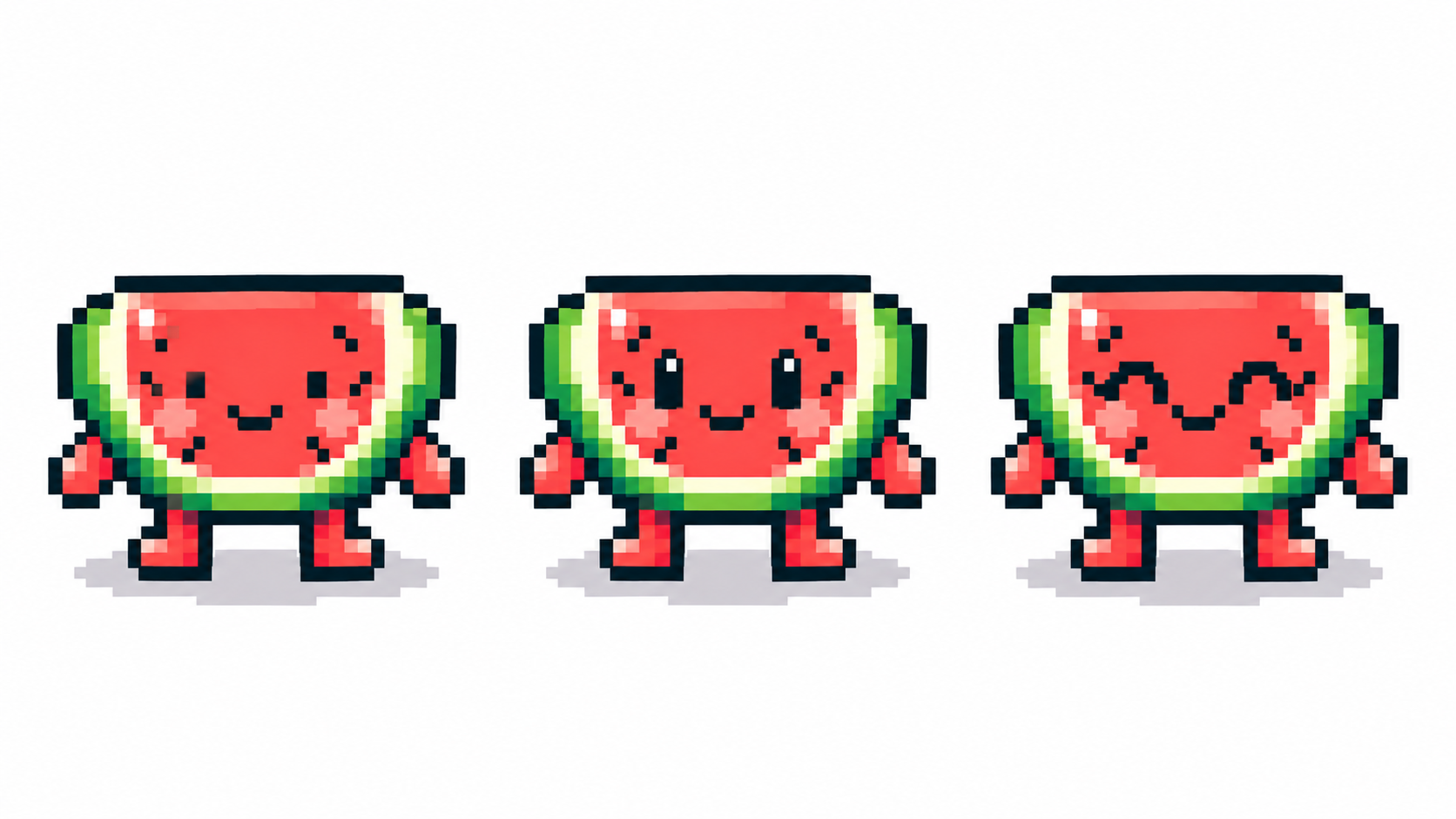
At 16–32 px, eyes are 2–4 pixels total — placement matters more than drawing. One pixel lower reads as tired, one apart as anything from stern to vacant. Standard solutions: single dark pixels for tiny sprites, 2×2 blocks with a 1 px highlight for heroes, and eyebrows (even one pixel) doing half the emoting. Draw twenty variants on a scratch layer; keep three.
Hair is masses, not strands
Individual strands at sprite scale become static. Block hair as 2–3 large masses following the skull, shade the masses, then cut 2–3 highlight clusters where light hits. Flyaway pixels belong only to wind-blown or wild styles — and even then, count them.
Skin in three steps
Base, shadow, blush-light is a complete skin ramp for most sprites; a fourth step serves larger portraits. Keep skin high-value (light) so features drawn in darker tones pop, and reserve saturated reds for cheeks/nose accents rather than whole faces. Hue shifting keeps skin from going muddy or chalky.
Symmetry, then character
Start symmetric — it reads instantly as “face” — then break it deliberately: a scar, an asymmetric fringe, one raised brow. At tiny sizes a single off pixel is a feature, not a mistake, provided everything else is clean. Portraits from converted photos are excellent reference for where features actually sit.
Frequently asked questions
How do you draw eyes in pixel art?
As placement, not drawing: 1–2 dark pixels positioned exactly, plus brows. Test variants — one pixel changes the whole mood.
Why do my faces look messy?
Too many colors and stray pixels in too few square pixels. Fewer tones, bigger clusters, delete the rest.
How do you shade skin?
Three steps — base, shadow, light — with hue-shifted shadows. Add a fourth only for larger portraits.
How do I draw hair that reads at sprite size?
Block 2–3 large masses following the skull, shade the masses, then cut a few highlight clusters. Single strands become static noise.
Ready to draw? Open the Pixel Art Maker