
How to Make Pixel Art Characters
Great sprite characters read in half a second at thumb size. That readability is engineered in a fixed order: silhouette, proportions, color.
Silhouette before anything
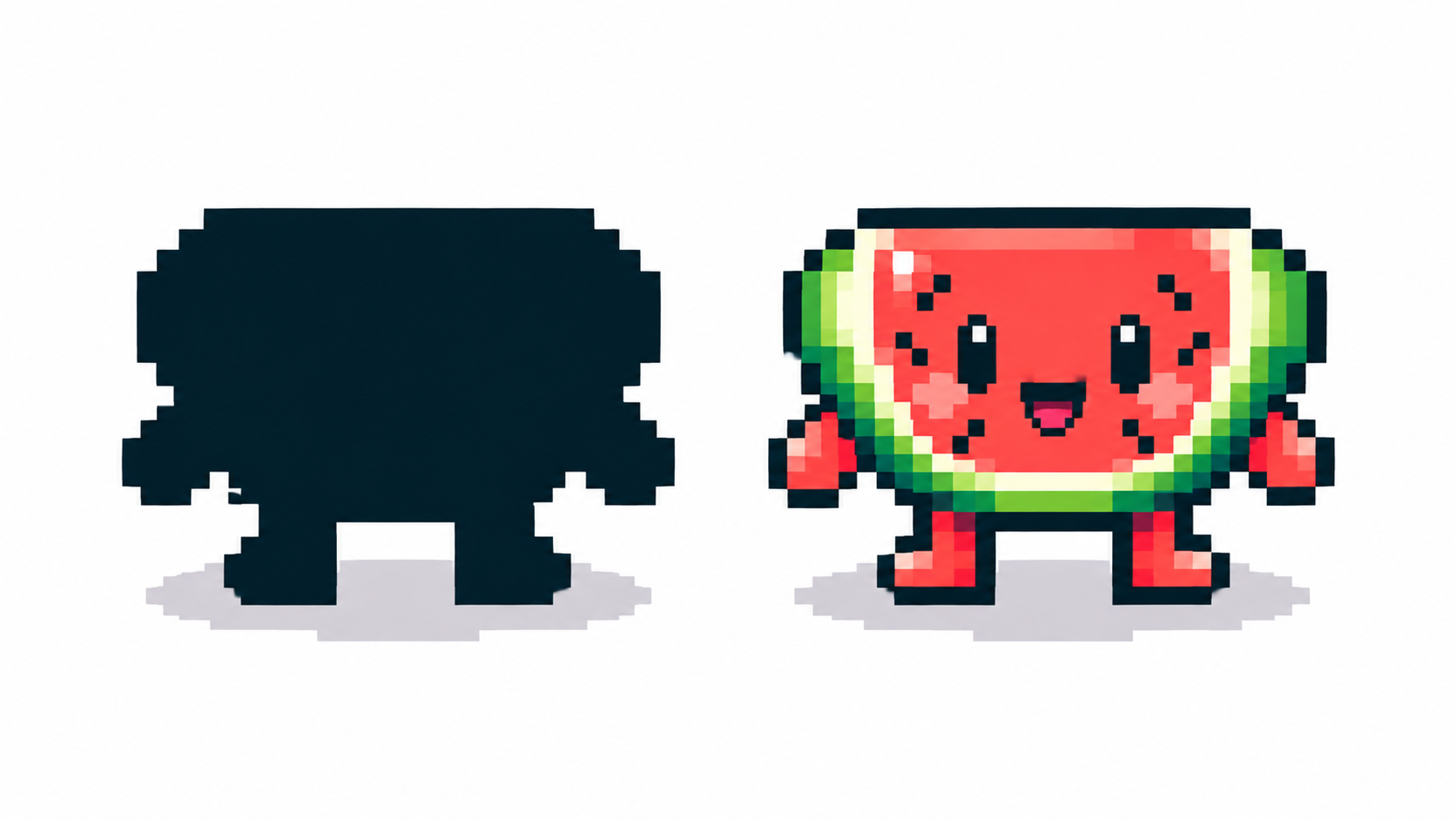
Block the whole character as one dark shape. If the pose, class and mood don’t read in pure black — readable weapon, distinct headwear, clear stance — no amount of shading will save it. Flip between silhouette and detail constantly while working; the silhouette is the character’s logo.
Proportions that survive small canvases
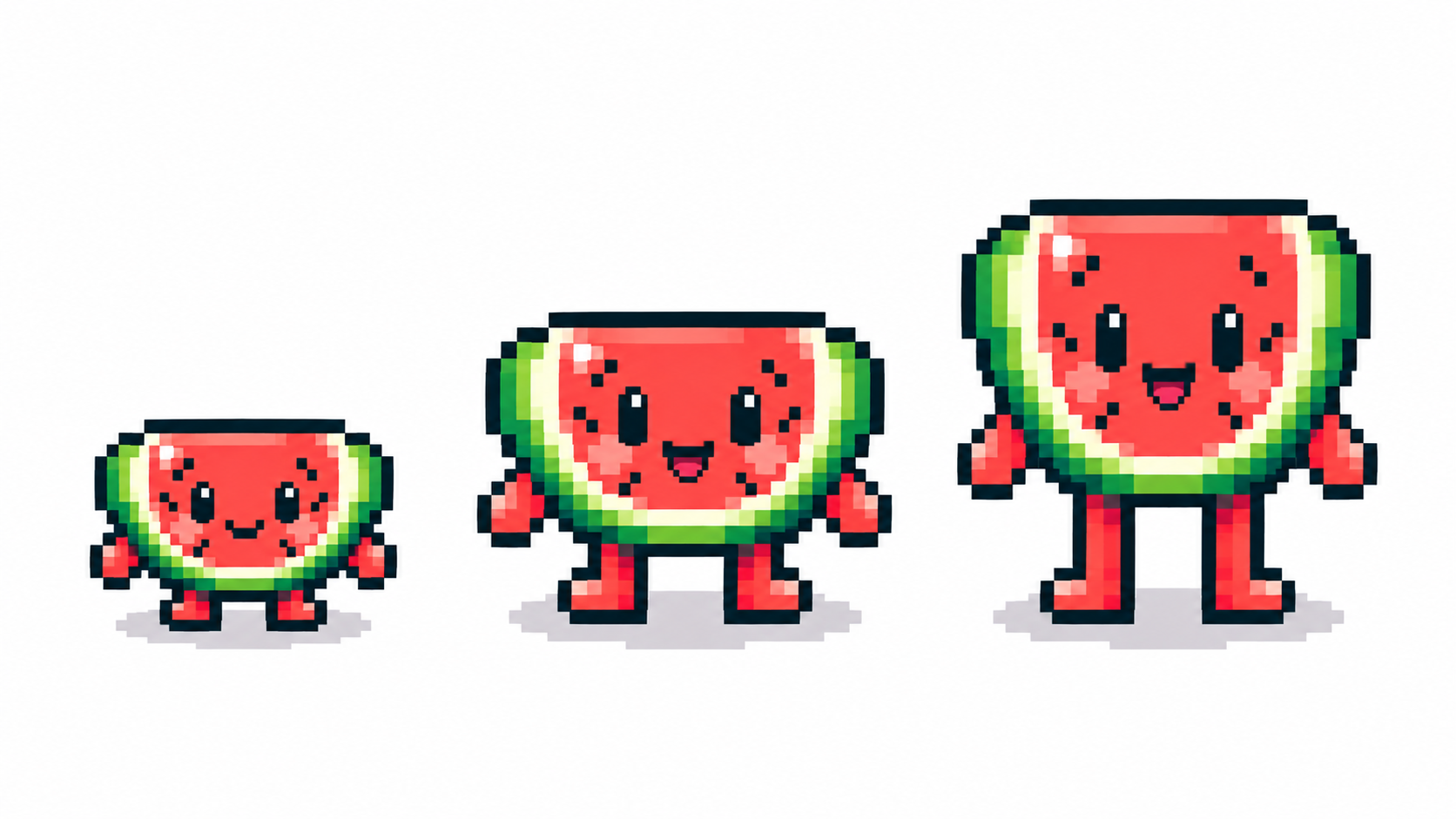
Realistic proportions die below 64 px — heads become smudges, limbs vanish. Exaggerate: bigger heads carry expression, thicker limbs survive motion, hands simplify to mittens until 48 px and up. Chibi-style 2–3-heads-tall bodies aren’t just cute; they’re legibility engineering. Pick proportions for the canvas, not for anatomy.
Color for identity, not decoration
Give each character one signature hue family plus neutrals, and keep the full sprite inside a tight palette (8–12 colors covers most heroes). Rivals and allies should differ in value structure first, hue second, so teams read even in grayscale. Accent color goes on exactly one focal item.
A workflow that survives edits
In the maker: sketch on one layer, clean lines above, flat colors below, shading on top — lock finished layers as you go. Variants (alt outfits, damage states) are layer copies, not redraws. When the turnaround reads clean, animate it: idle and walk cycles are where characters become alive (see walk cycles).
Frequently asked questions
What size should a game character be?
Match your grid: 16 px tiles want ~16 px characters, and 32 × 32 is the all-round classic. Bigger only when detail demands it.
How many colors for a character?
Most heroes shine at 6–12. One signature hue, neutrals, one accent.
Why does my character look blurry?
Usually mixed pixel densities or anti-aliased edges. Keep one grid, hard edges, and check at 100%.
How do I make same-game characters look related?
Share proportions, palette family and outline weight across the cast; differentiate with one signature hue and silhouette accents.
Ready to draw? Open the Pixel Art Maker